
BROADBAND GIANTS SIGN NEW CHARTER
THE END OF HIDDEN HIKES?
THE EXECUTIVE SUMMARY
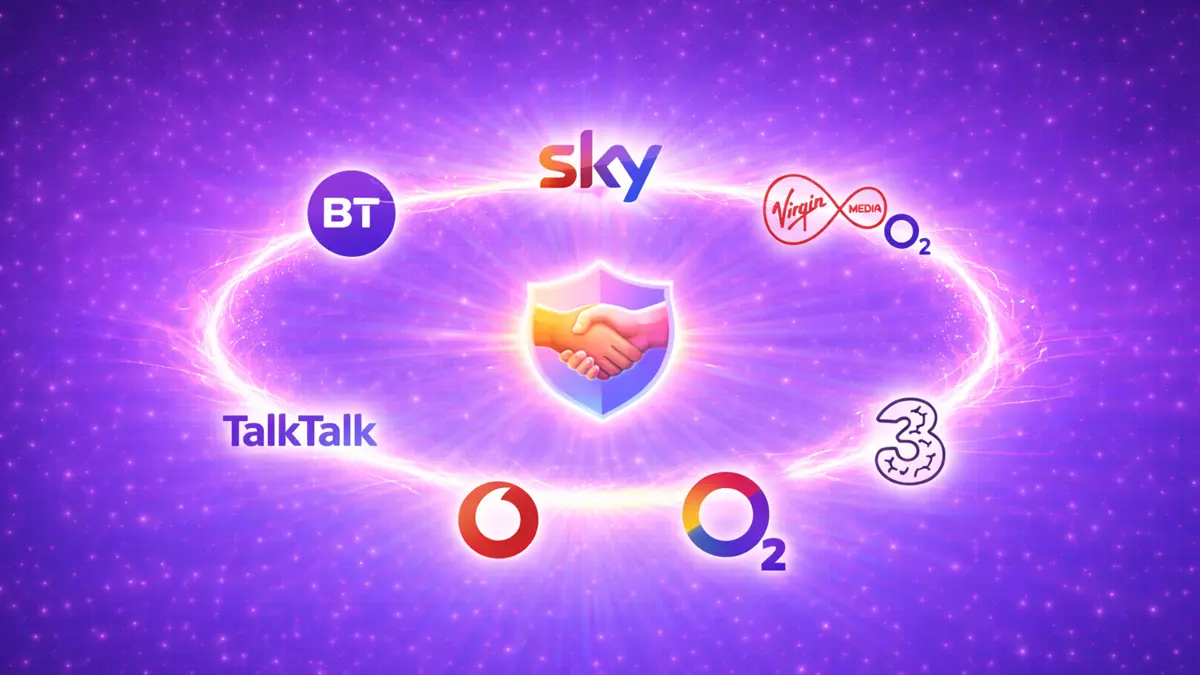
The days of signing a contract and then being hit with an unexpected inflation based price hike months later are finally ending. In a landmark agreement between the Government and major telecoms providers, a new "Telecoms Consumer Charter" has been established to protect customers in the UK. Below, we compare this approach with US broadband transparency rules.
THE NEW COMMITMENTS
Led by Chancellor Rachel Reeves and Technology Secretary Liz Kendall, the industry heavyweights have committed to a set of clear principles designed to restore trust in the sector. The core of the charter focuses on three critical pillars:
- No Surprise Hikes: The confusing "CPI + 3.9%" formulas are being scrapped. Customers must know exactly what they will pay throughout their contract term.
- Fair Treatment: Providers have pledged to support customers facing financial hardship. If you lose your job, you should be able to move to a cheaper plan without being slapped with a penalty fee.
- Social Tariff Visibility: Cheap plans for those on benefits have existed for years but were often hidden. The new charter demands these are "signposted" clearly to eligible customers.
QUOTED FROM THE TOP
"Broadband and mobile customers deserve to be treated fairly and not face sudden jumps in their bills... These changes will make a real difference to millions of consumers across the country."
— Liz Kendall, Technology Secretary
UK VS USA: A CONSUMER COMPARISON
While this news is centred on the UK Government's action, it highlights a growing divide between UK and USA broadband regulations. Both nations are fighting for clearer pricing, but the methods differ.
| FEATURE | 🇬🇧 UK (NEW CHARTER) | 🇺🇸 USA (FCC LABELS) |
|---|---|---|
| Price Transparency | Strict. Pounds & pence rises must be known at sign-up (or free exit). | Moderate. "Nutrition Labels" show fees, but promo rates can still expire. |
| Mid-Contract Hikes | Restricted. Inflation-linked/percentage-based rises are banned; any increases must be stated upfront in pounds and pence (or customers must be allowed to exit penalty-free). | Variable. Allowed, but must be disclosed in the terms. |
| Switching Ease | One Touch Switch. Automated between all networks. | Manual. Often requires calling "retention" departments. |
| Low Income Help | Social Tariffs. Voluntary but strongly pushed by Gov. | Lifeline/ACP. Federal subsidies (funding often debated). |
The UK's approach is more interventionist, forcing companies to agree to behaviour standards, whereas the USA focuses on "labelling" to let the consumer decide.
INDUSTRY REACTION
The giants of the UK broadband world have publicly backed the move, keen to show they are on the side of the consumer.
BT Group, represented by Chief Exec Allison Kirkby, emphasised that protecting customers is tied to infrastructure: "Nobody is investing in the UK like BT – and we’re encouraging the Government to take bold decisions to support continued investment."
Virgin Media O2's CEO Lutz Schüler pointed to their massive fibre rollout: "We welcome this Charter which strengthens predictability... Maintaining essential digital infrastructure investment like this is essential if the UK is to keep pace."
Even the alternative networks are on board. Paddy Paddison from the INCA (Independent Networks Cooperative Association) noted: "Customers should be able to understand, in plain pounds and pence, what they are signing up to."
THE SKY ANOMALY
While most providers are moving toward a model where you know your price rise on Day 1 (e.g., "It will go up by £3 in April"), Sky is taking a different path.
Sky is the only major provider mentioned that has not adopted the stance of setting fixed amounts at sign-up. Instead, Sky's approach is:
- Warning: They warn you that prices may change.
- Notification: They will inform you when the actual amount is decided.
- The Escape Hatch: Crucially, Sky customers will have 30 days to leave penalty-free if they do not agree with the rise.
This "freedom to leave" model is actually closer to how energy contracts work and may offer consumers more power than being locked into a "known" price rise they can't escape.
MARKET REALITY: 2026 PRICING
Despite the noise about price hikes, the actual cost of data in the UK has plummeted. Competition from "Altnets" (Alternative Networks) has forced the big giants to lower their baseline.
| SERVICE TIER | 2024 PRICE (AVG) | 2026 PRICE (AVG) | CHANGE |
|---|---|---|---|
| Entry Fibre (100 Mbps) | £28/mo | £24/mo | ▼ CHEAPER |
| Gigabit (900 Mbps) | £45/mo | £29/mo | ▼ MASSIVE DROP |
| Social Tariffs | £15/mo | £12/mo | ▼ CHEAPER |
With the "One Touch Switch" system now in place across the market, switching is much simpler — your new provider manages the process. If you are out of contract, you are likely overpaying by £10-£20 a month. The best advice? Use the new charter's protections to switch to a cheaper deal immediately.
CONSUMER FAQS
WILL MY BROADBAND PRICE STILL GO UP?
Yes, but it should no longer be a surprise. Under the new guidance, if you sign a contract for £24/month, you should be told upfront: "It will rise to £26 in April 2027." If they cannot tell you that, they must let you leave for free if they raise the price.
DOES THIS AFFECT MOBILE CONTRACTS?
Yes. The charter covers both broadband and mobile providers like VodafoneThree and Virgin Media O2. The goal is a unified approach to telecoms billing transparency.
HOW DO I FIND A SOCIAL TARIFF?
Providers must now signpost these clearly on their websites. You no longer need to dig through obscure help pages. If you receive Universal Credit or similar benefits, search your provider's name + "Social Tariff" to find plans often costing less than £15/month.
HOW DOES THIS COMPARE TO THE USA?
The UK is moving towards fixed-value rises or penalty-free exits. In the USA, the FCC requires 'Broadband Nutrition Labels' (rules adopted in 2022; required for providers beginning in 2024), but strict caps on mid-contract hikes are less standardised.

VERDICT: A WIN FOR USERS?
Clarity is King. Knowing exactly what you will pay is better than guessing inflation rates.
Sky's Bold Move: Their "free to leave" policy might force others to offer better retention deals.
Switch Now: Prices are at historical lows—don't wait for your contract to end if you are already out of term.