
Our Xfinity Internet review for 2026 evaluates the reality of living with the US's largest cable provider. While Xfinity advertises "10G" branding, most connections still rely on coaxial cable, meaning download speeds are fast (300 Mbps to 2 Gbps) but upload speeds often remain lower than fiber competitors. We test the latest xFi Gateway hardware to see if its Wi-Fi 7 capabilities justify the rental fee or if you are better off with your own router.
We also break down the fine print that affects your monthly bill. Xfinity pricing varies by region, with significant differences in data caps (1.2 TB vs Unlimited) and contract terms. Whether you are looking for a flexible no-contract plan or a bundled package to lock in a rate, this guide helps you navigate promo expirations and hidden costs to determine if Xfinity offers the best value for your specific address.
Xfinity Internet Score Summary
Xfinity delivers home internet across much of the U.S., mainly over a hybrid fiber-coax network, with fiber-to-the-home available in a smaller number of areas. Plan names, pricing models, and top speeds can vary by address, and real-world results depend on local network demand, your in-home wiring, and your WiFi setup.
- ⚡ Wide Speed Range
- 🚀 Gigabit & Multi-Gig
- 📶 xFi Gateway
- 🔒 Advanced Security
- 📺 TV & Mobile Bundles
- 📈 Unlimited Data (newer plans)
- 💪 Nationwide Hotspots
- 👪 Parental Controls
- 📏 No-Contract + Price Lock
- 📞 Digital Phone
- 📱 Xfinity App Tools
- 🏢 Business Options
- 🎮 Gamers
- 🎥 Streamers
- 👨👩👧 Families
- 🏠 Remote Workers

Xfinity Internet Review 2026: Performance & Value Verdict
Is Xfinity the Right Choice in 2026?
The 2026 Verdict: Unmatched Availability vs. Upload Limitations
Our 2026 analysis finds Xfinity to be the most accessible high-speed option for US households. While download speeds hitting 2 Gbps are impressive, potential customers must weigh these against the upload limitations of coaxial cable and regional data caps that generally do not exist on fiber competitors.
Ties the Broadband Expert says: “Xfinity excels at delivering raw download speed to the masses. However, creators and gamers should check if their address qualifies for 'Next Gen' upload speeds, as standard cable plans may feel restrictive compared to fiber.”
XFINITY INTERNET FEATURES 2026
⚡ “Is Xfinity worth it in 2026? From X-Class symmetrical speeds to Storm-Ready WiFi, here is what you actually get.”
FLEXIBLE CONTRACTS
Choose between month-to-month freedom or 1-to-2-year price locks for deeper discounts. Bundling with Mobile often secures the lowest rate.
DATA CAP OPTIONS
While the 1.2 TB cap remains in some regions, 'xFi Complete' add-ons or X-Class plans now include Unlimited Data to handle 4K streaming and large game updates.
NEXT-GEN WI-FI 7 GATEWAY
The latest XB10 and XB8 Gateways support Wi-Fi 6E and Wi-Fi 7, reducing lag in crowded homes and handling 100+ smart devices with ease.
SYMMETRICAL SPEEDS (SELECT AREAS)
New 'X-Class' internet delivers symmetrical upload and download speeds (up to 2 Gbps) in DOCSIS 4.0 upgraded neighborhoods.
ADVANCED SECURITY SHIELD
AI-driven security blocks billions of threats annually. It automatically stops suspicious activity on connected devices like cameras and smart thermostats.
STORM-READY CONNECTION
Optional 'Storm-Ready WiFi' device provides battery backup and a 4G/5G cellular failover, keeping your internet online during local power outages.
LOW LATENCY GAMING
'Active Queue Management' on newer gateways prioritizes gaming traffic to reduce lag spikes, even when others are streaming 4K video.
MOBILE BUNDLE SAVINGS
Xfinity Internet customers get exclusive access to Xfinity Mobile. extensive 5G coverage and data savings can often offset the cost of your internet bill.
23+ MILLION HOTSPOTS
Connect automatically to millions of secure Xfinity WiFi hotspots nationwide, saving your mobile data plan when you are on the go.
Xfinity Internet Pros and Cons – Straight-Talking 2026 Review
Where Xfinity Shines (and What to Check Before You Join)
✔Widest High-Speed Availability
Xfinity's hybrid fiber-coax network reaches addresses that pure fiber providers still miss. For millions of US households, Xfinity is often the only wired option capable of delivering stable multi-gigabit speeds.
✔Superior xFi Hardware
The latest XB8 and XB10 Gateways support Wi-Fi 6E/Wi-Fi 7, handling heavy device loads better than most budget routers. The optional "Storm-Ready" add-on also provides cellular backup during power outages.
✔Mobile Bundle Value
Xfinity Internet customers gain access to Xfinity Mobile. Bundling your smartphone lines can result in significant total household savings that often offset the cost of the internet plan itself.
✖Asymmetric Upload Speeds
Unless you live in a "Next Gen" upgrade area, upload speeds are significantly slower than downloads (often capped at 35 Mbps). This can be a bottleneck for creators or heavy work-from-home users compared to fiber.
✔Massive Hotspot Network
Subscribers get automatic access to over 23 million secure WiFi hotspots nationwide. This is a major perk for saving mobile data when traveling or working from cafes and public spaces.
✖Post-Promo Price Increases
While introductory rates are competitive, standard pricing applies after the 12 or 24-month contract term ends. Customers must be proactive about renegotiating or switching plans to avoid bill shock.
Xfinity Internet Plans: Pick the Right Speed
Browse Xfinity’s 2026 plan speeds, compare typical households
Xfinity 300 Mbps
A practical starting point for smaller households: everyday browsing, video calls, and a couple of HD or 4K streams. In testing, this tier usually feels “fast enough” on a wired connection, but WiFi performance can dip if your router is far from where you actually stream. Some current offers bundle the Xfinity gateway and unlimited data, while other plan types can differ by market.
Xfinity 500 Mbps
A comfortable step up for families with lots of devices: multiple 4K streams, frequent app downloads, and cloud photo backups without feeling like someone is always “using up the internet.” What you notice most is fewer slowdowns when two or three people do heavy tasks at once. Upload speeds are still an important check here, especially if you work from home or share large files.
Xfinity 1 Gig
Best for bigger households, home offices, and anyone who regularly downloads large games or moves big files. The main benefit is headroom: even at peak times, you have more bandwidth to absorb congestion and device spikes. To actually see gig-class speeds, you typically need modern WiFi hardware or Ethernet, plus a device that can handle it. Upload and latency can vary depending on whether your address is on cable or fiber.
Xfinity 2 Gig
A specialized pick for high-demand homes: multiple people streaming, gaming, and downloading at the same time, or creators who pull large project files from the cloud. It is also useful when you want fast downloads across several devices at once, not just on a single laptop. In practice, multi-gig speeds are easiest to benefit from with wired gear (2.5GbE or better) and a capable router, since WiFi often becomes the bottleneck.
Xfinity X-Class (Symmetrical)
In select upgraded markets, X-Class offers more balanced download and upload speeds, which matters for live streaming, large uploads, and smoother two-way video calls. If you have ever watched a call get choppy while someone else uploads a big file, this is the kind of improvement that can make day-to-day use feel more stable. Availability is address-dependent, and the exact tiers and equipment requirements can vary by neighborhood.
About Xfinity Internet: Network Technology & Market Position
Understanding Comcast's transition to DOCSIS 4.0 and the xFi Ecosystem.
Who Is Xfinity Internet?
Xfinity is the residential broadband arm of Comcast, operating the largest Hybrid Fiber-Coaxial (HFC) network in the US. In 2026, they are in the midst of a major infrastructure upgrade, transitioning from standard cable to DOCSIS 4.0 (X-Class). This technology allows them to deliver symmetrical multi-gig speeds over existing wires, directly competing with full fiber providers in upgraded regions.
The "Connectivity" Mission
Xfinity has shifted focus from simply selling "speed" to providing a "managed experience." Their strategy centers on the xFi Gateway as the heart of the home, integrating Advanced Security, parental controls, and smart home management. The goal is to create a seamless ecosystem where Xfinity Mobile and home internet work together to retain customers through convenience rather than contracts.
Why Xfinity Stands Out
Reliability hardware and ecosystem depth set them apart. Features like Storm-Ready WiFi (which provides cellular backup during power outages) and a network of 23+ million hotspots offer utility that budget ISPs cannot match. While they are rarely the cheapest option, the ability to bundle mobile lines and hardware often provides better overall household value for heavy users.
Xfinity Internet Company History: Timeline of Key Milestones
A quick timeline of major brand and network updates that shaped how Xfinity Internet works today.
2010 – Xfinity Brand Launch
Comcast introduced the Xfinity brand to group its consumer internet, TV, and voice services under one name. For shoppers, this is when “Xfinity Internet” became the primary label you see on plans, equipment, and support.
2016 – DOCSIS 3.1 Rollouts Begin
DOCSIS 3.1 upgrades started rolling into more markets, enabling gig-class download speeds over cable lines. It also set the stage for later upstream improvements, which matter if you upload large files, use cloud backups, or rely on video calls.
2017 – xFi Debuts for Home WiFi Management
Xfinity introduced xFi, built around app-based controls for home WiFi. For most households, the practical value is visibility and basic management, like checking connected devices or setting parental controls, but features can vary by gateway model and plan.
2015 – Gigabit Pro Fiber Service Launch
Gigabit Pro launched as a fiber-based option aimed at a small subset of addresses that can support it. When it is available, it is typically used by power users who care about high upload speeds and consistency, but eligibility is limited and install requirements can be stricter than standard cable service.
2020–2026 – Capacity and Upload Improvements Expand
Over the past several years, Xfinity has focused on reliability and capacity upgrades, plus higher upload options in upgraded areas. This is where you see newer plan structures in some markets and next-gen cable enhancements that can improve day-to-day performance, although results still vary by neighborhood load, time of day, and in-home WiFi.
Why Choose Xfinity Internet in 2026?
Broad Availability • Multi-Gig Speeds • Unique Hardware Perks
Unmatched U.S. Coverage
Xfinity remains the most widely available high-speed provider across 40 states. Their hybrid network delivers gigabit speeds to millions of homes that fiber providers have yet to reach.
Plans for Every User
Options range from low-cost Internet Essentials (75–100 Mbps) to standard Gigabit tiers. In upgraded "Next Gen" neighborhoods, X-Class plans now offer symmetrical speeds up to 2 Gbps.
Storm-Ready Reliability
The xFi Gateway anchors a smart home ecosystem that includes Storm-Ready WiFi (cellular backup during outages), unlimited data options, and seamless bundling with Xfinity Mobile for extra savings.
Xfinity Internet Speed Test Results – All Plans (2026)
Measured Speeds Across Xfinity’s Core Plans
Xfinity provides a variety of speed tiers to match different needs. Below are representative 2026 averages for each main plan, based on FCC broadband performance data and Xfinity’s official specifications. These figures offer a practical guide for selecting the right speed for streaming, gaming, and working remotely.
| Package | Ping | Download | Upload |
|---|---|---|---|
| 300 Mbps | — | Up to 300 Mbps | Uploads vary by area; enhanced markets typically ~75–200 Mbps. Symmetric only on X-Class. |
| 500 Mbps | — | Up to 500 Mbps | Uploads vary by area; enhanced markets typically ~75–200 Mbps. Symmetric only on X-Class. |
| 1 Gig (1000 Mbps) | — | Up to 1000 Mbps | Uploads vary by area; enhanced markets typically higher. Symmetric only on X-Class. |
| 2 Gig (2000 Mbps) | — | Up to 2000 Mbps | Uploads vary by area; symmetric only on X-Class (select markets). |
| X-Class (select areas) | Low-lag | 300 / 500 / 1000 / 2000 Mbps | Symmetrical uploads on DOCSIS 4.0 X-Class tiers where available. |
| Up to 10 Gig Fiber (limited) | — | Up to 10,000 Mbps | Special-order fiber service; availability limited, contact Xfinity. |
⚠️ Speeds can vary depending on location, connection type, equipment, and network traffic.
Why Xfinity Delivers Strong Performance
Hybrid Fiber-Coax Network
Xfinity’s DOCSIS 3.1 technology delivers gigabit speeds over its hybrid network, with expanding FTTH in select areas.
xFi Gateway
Wi-Fi 6-ready modem/router with app-based controls, parental settings, and optional mesh extenders for whole-home coverage.
Advanced Security
Built-in protection that blocks suspicious activity and helps keep all connected devices safe from online threats.


How Does Xfinity Internet Compare to Competitors?
Xfinity vs. Fiber vs. 5G Home Internet: The 2026 Breakdown
Pricing & Contracts
To compete with 5G home internet, Xfinity now offers aggressive price guarantees (often 2–5 years) on new plans, with equipment and unlimited data included. While introductory rates are competitive, fiber providers like AT&T or Google Fiber often have simpler "what you see is what you get" pricing without the threat of future hikes.
Download vs. Upload Speeds
Xfinity matches or beats most competitors on download speeds (up to 2 Gbps). However, unless you are in a DOCSIS 4.0 "X-Class" area, upload speeds (35–200 Mbps) still lag far behind the symmetrical uploads standard on fiber networks (Verizon Fios, Frontier), which can be crucial for large file backups.
Reliability & Latency
Xfinity's wired connection is significantly more stable than T-Mobile or Verizon 5G Home Internet, which can suffer from congestion. However, serious gamers may still prefer pure fiber, as Xfinity's coaxial network typically has slightly higher latency (ping) than a direct fiber-to-the-home connection.
Hardware & Ecosystem
Xfinity wins on ecosystem. The xFi Gateway (XB8/XB10) is often superior to the basic routers provided by budget ISPs, offering Wi-Fi 7 capability and active security scanning. Added perks like the 23 million+ hotspot network and mobile bundling give it a utility advantage that smaller fiber providers cannot match.
Customer Support
Xfinity's digital support (app, chat assistant) is robust, but reaching a human agent can still be difficult compared to top-rated regional ISPs like Sonic or Ziply. Customer satisfaction scores have improved with the removal of data caps on new plans, but generally still trail behind dedicated fiber providers.
TIES’ FUN XFINITY INTERNET FACT
Xfinity now serves more than 32 million households across the United States, using a hybrid fibre-coax network that keeps expanding through 2026.
What Data Does Xfinity Internet Store?
Xfinity Privacy Overview: Data Collection, Security, and Optional Controls
Below is a practical summary of the information Xfinity may collect or process to deliver internet service, manage accounts, protect its network, and meet legal obligations. Some controls are optional and apply only if you enable them (for example, security filtering features). The FindCheapBroadband team compiled this data on 3rd of January 2026.
Xfinity Internet Data Handling Table
| Data Type | Handling Status |
|---|---|
| Account Identifiers | Basic account information (such as name and account identifiers) is used to set up and manage service, billing, and support. |
| Service Address | Used to provide service at a specific location, schedule installations or repairs, and support address-based eligibility and plan availability. |
| IP Addresses and Device Identifiers | May be collected when devices connect, for routing/service delivery, network management, troubleshooting, and security functions. |
| DNS Queries and Network Activity | Xfinity may process DNS searches and certain network activity data to deliver service, maintain network performance, and support security and fraud prevention. This is different from storing the full content of everything you do online. |
| Connection Timestamps and Diagnostics | Used for troubleshooting, reliability monitoring, capacity planning, and responding to service issues or outages. |
| Device Details on Your Home Network | Connected device and gateway details may appear in the Xfinity app or gateway interface for network management and technical support. |
| WiFi Network and Gateway Telemetry | Gateway performance data (such as signal quality and connection status) may be used to improve WiFi performance and support troubleshooting. Results can vary based on the specific gateway model and home layout. |
| Security Event Information (Optional) | If you enable xFi security features, the service may log security-related events (for example, blocks or alerts). What is collected can depend on the feature and your equipment. |
| Website and App Activity (Cookies and Similar Tools) | When you use Xfinity websites or apps, tracking technologies may collect usage information for functionality, analytics, and marketing, depending on your settings and applicable law. |
| Marketing and Advertising Preferences | Xfinity’s policy describes use of information for marketing and advertising, with opt-in or opt-out controls available in privacy settings depending on the category of data and where you live. |
| Payment and Billing Information | Billing details are used to process payments, manage invoices, and handle disputes or collections, with standard security and compliance expectations for financial data. |
| Identity Verification and Credit Checks | During sign-up or account changes, Xfinity may use information for identity verification and credit or payment risk assessment (where applicable). |
| Customer Support Interactions | Support chats, calls, and service notes may be stored to resolve issues, document service history, and improve support. Some interactions may be recorded depending on the channel and disclosure. |
| General Location Signals | General location (such as city or ZIP code) may be inferred from network information like IP address leasing or WiFi access points. More precise location collection is typically tied to mobile services or features you enable. |
| Aggregated or Deidentified Data | Xfinity’s policy indicates it may aggregate or deidentify information for analytics and other business purposes. Deidentified data is treated differently than information that directly identifies you. |
What is the Xfinity xFi Gateway?
Reviewing the Hardware: XB10, Wi-Fi 7 & The Connected Home
The Hardware: XB8 & XB10
The xFi Gateway acts as both modem and router. In 2026, Gigabit+ subscribers typically receive the XB8 (Wi-Fi 6E) or the flagship XB10 (Wi-Fi 7).
The XB10 is designed for "X-Class" symmetrical speed tiers. It utilizes DOCSIS 4.0 technology and tri-band Wi-Fi 7 to handle 300+ devices with ultra-low latency—ideal for VR gaming and simultaneous 8K streaming.
The Ecosystem: Security & Control
Renting the gateway unlocks the xFi ecosystem. This includes the Xfinity App for managing user profiles and pausing Wi-Fi, plus Advanced Security which blocks malware at the router level.
Coverage & Backup: The system integrates with xFi Pods for mesh coverage in large homes and supports the Storm-Ready WiFi add-on, which keeps your internet running via cellular data during power outages.
Who Xfinity Internet Is Good For
Five Everyday Matches Where Xfinity Fits Well
Connected Families
The xFi App is a superpower for parents. You can set "Active Time Limits" for kids, pause Wi-Fi for dinner, and filter content. Plus, the Unlimited Data on new plans means you never have to worry about overage fees from too much 4K streaming.
Students & Renters
Xfinity offers flexible no-contract options ideal for the academic year. Their widespread availability means you can likely transfer your service easily when you move to a new apartment, often keeping your same equipment.
Remote Workers
For those who cannot afford downtime, Xfinity's Storm-Ready WiFi add-on is a game changer. It provides a battery backup and automatic cellular failover to keep your Zoom calls running even during local power or cable outages.
Mobile Savers
If you are looking to cut total household bills, Xfinity is a top choice. Bundling Xfinity Mobile lines can save hundreds per year compared to major carriers, often effectively subsidizing the cost of your internet plan.
Gamers & Streamers
With download speeds hitting 2 Gbps, Xfinity makes downloading massive 100GB+ game patches nearly instant. Note: Hardcore competitive gamers should check if their address qualifies for X-Class symmetrical speeds for the lowest possible latency.
Availability, speeds and student deals vary by location. Check your exact address for current plans and upload tiers.
Who Xfinity Internet Isn’t Ideal For
Five Scenarios Where Another Option May Fit Better
Creators in Non-Upgraded Areas
Unless your address qualifies for X-Class (DOCSIS 4.0), upload speeds are likely capped at 35 Mbps. YouTubers, Twitch streamers, or videographers will find this painfully slow compared to the symmetrical 1,000+ Mbps upload speeds standard on fiber competitors.
Hardware Enthusiasts
While you can use your own modem/router, doing so often disables key ecosystem perks. You lose access to Unlimited Data bundles (often tied to xFi rentals), Storm-Ready WiFi cellular backup, and the advanced security features built into the app.
Set-It-and-Forget-It Spenders
Xfinity relies on promotional pricing. Once your 12 or 24-month contract ends, the rate will increase to the standard price (often $20–$40 higher). If you hate calling to renegotiate your bill every year, a flat-rate provider like Google Fiber or T-Mobile 5G may be less stressful.
Ultra-Competitive Gamers
While Xfinity is fast, its coaxial network typically has slightly higher latency (ping) and jitter than pure Fiber-to-the-Home (FTTH) connections. For pro-level FPS gamers where every millisecond counts, fiber is the technically superior choice.
True Rural Residents
Xfinity is a cable provider, meaning it requires a physical line to your home. If you live miles from the nearest node or town center, you likely won't be serviceable. In these cases, Starlink or Fixed Wireless Access (5G) are your primary high-speed options.
What Paid Extras Does Xfinity Internet Offer?
The 6 Add-ons That Matter Most
Storm-Ready WiFi
A must-have for remote workers. This device acts as a Wi-Fi 6 extender and a 4G/5G cellular backup. If your cable line goes down or the power cuts out, it keeps your essential devices online for up to 4 hours via battery backup.
xFi Complete
The "peace of mind" bundle. For an extra $10–$25/mo (depending on promos), it includes the Gateway rental, Unlimited Data, and Advanced Security. It also qualifies you for a free Wi-Fi Pod if the in-app assessment detects dead zones.
Unlimited Data (Standalone)
If you use your own modem or don't want xFi Complete, you can add Unlimited Data separately (usually $30/mo) to avoid the 1.2 TB cap overage fees. Note: Many new "All-In" plans now include this for free.
WiFi Boost Pods
One-time purchase mesh nodes that plug into wall outlets to extend coverage. Unlike generic extenders, these integrate seamlessly with the xFi Gateway to create a single mesh network name (SSID) for the whole house.
Service Protection Plan (SPP)
An optional monthly insurance that covers the cost of technician visits for in-home wiring issues (e.g., a bad coax jack or damaged internal line). Without this, service calls unrelated to outside network issues often incur a fee.
xFi Gateway Rental
The monthly lease fee (typically $15/mo) for the modem/router hardware. While you can save money buying your own, renting is required to access features like Storm-Ready WiFi and the Unlimited Data discount bundles.
Xfinity Internet – Awards and Industry Recognition
Highlights: 2024 Red Dot design awards, DOCSIS 4.0 rollout milestones, and regional reader-voted recognition. The FindCheapBroadband team compiled this data on 3rd of January 2026.
Design awards for hardware
Comcast received 2024 Red Dot: Product Design recognition for three connectivity products: the Xfinity Advanced Modem (XD4), the Multifamily Xfinity Broadband Gateway (MXB1), and Storm-Ready WiFi. Design awards are not a measure of coverage or speed at your address, but they can be a useful signal that the equipment is built with usability in mind, such as simpler setup, clearer status indicators, or a more practical footprint for apartments and media cabinets.
Network upgrade milestones
Comcast announced the first residential DOCSIS 4.0 deployment in December 2023, introducing multi-gig symmetrical capability in select neighborhoods. In 2024, Comcast and CommScope also announced a milestone where a Full Duplex DOCSIS (FDX) amplifier was live serving customers on Comcast’s network. In day-to-day terms, these upgrades matter because they can unlock higher uploads and improve consistency, but availability is still market-by-market and sometimes block-by-block.
Regional readers’ choice recognition
Xfinity shows up regularly in local, reader-voted awards, which are more about community preference than lab testing. Examples include a 2024 “Best of the Best” mention from Times Leader readers, and a 2025 “Best of Hartford” readers’ poll result that named Xfinity Internet as a top choice in the Hartford area. These results can be a helpful data point for local reputation, but they do not replace checking plan details and service quality at your specific address.
Satisfaction study highlights
Large customer satisfaction studies tend to show mixed outcomes that vary by region and network type. In J.D. Power’s 2024 U.S. Residential Internet Service Provider Satisfaction Study (wired internet), Xfinity ranked second in the East, North Central, and West regions, and third in the South region. In ACSI’s 2025 Telecommunications report, Xfinity (Comcast) scored 69/100 among non-fiber ISPs, while Xfinity Fiber scored 75/100 in the fiber category. These studies reflect customer sentiment and experience over time, and they can be useful for context, but your own results still depend on local network conditions, billing terms, and in-home WiFi setup.
Common Complaints About Xfinity Internet from Real Users
The Three Most Reported Issues in 2026
Post-Promo Bill Shock
While 1- and 2-year price guarantees provide temporary stability, the price hike after the contract ends remains a top complaint. Users often see their bills jump by $25–$40 overnight and find themselves having to call retention support to negotiate a new deal or face standard rates.
The "Upload Speed Lottery"
The rollout of "Next Gen" upload speeds is uneven. A customer on one street might get 200 Mbps uploads, while someone two blocks away is stuck on the legacy 35 Mbps cap. This inconsistency is a major frustration for content creators and gamers who expected better performance based on marketing claims.
Digital Support Loops
As Xfinity shifts to "digital-first" support, users increasingly report difficulty reaching a live human agent. Getting stuck in automated chatbot loops or navigating the Xfinity Assistant when trying to resolve complex outages or billing disputes is a frequent source of negative feedback.
Xfinity Internet Review Rating Breakdown
Xfinity Internet achieves a 7.1 out of 10 Overall Rating
🏆 How We Rated Youfibre Internet
Affiliate Disclosure We may earn a commission if you sign up through our links, however, commission rates are never a factor in our rankings.
The weights below are the same for all our ISP Reviews to provide a fair comparable score.
How this ensures transparency:
This approach lets us judge the best deal for each customer without bias. Commission, CPA, payout rates, and margins are not used anywhere in the scoring model, so providers cannot buy a higher rank. Every score is computed for what’s best for the customer.
Xfinity Internet Review: Why It Scores 7.1/10 in 2026
The 2026 Verdict – Strong Hardware, Mixed Value
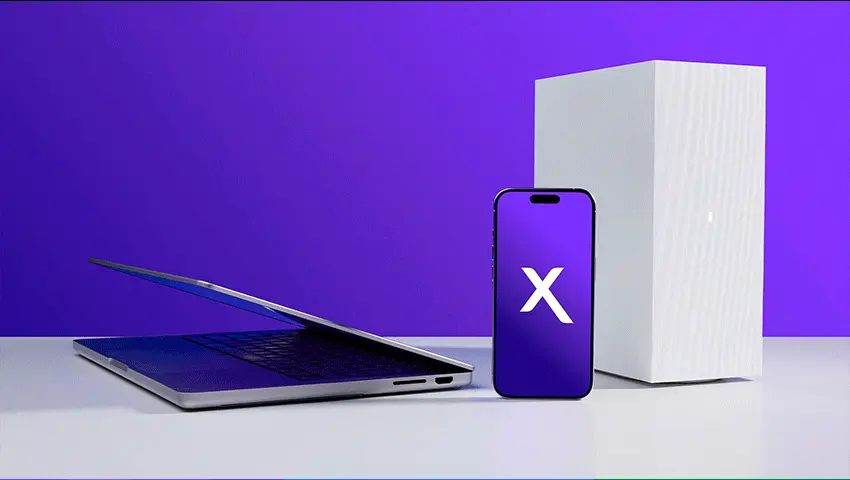
The "Reliable Default" Choice
Our 7.1/10 rating reflects Xfinity's position as a reliable utility. It scores highly for its massive US footprint, excellent xFi hardware, and download consistency.
However, it misses a higher score due to the disparity between download and upload speeds (in non-fiber areas) and the steep price increases customers face once promotional contracts expire. It is a solid B-grade service: fast and widely available, but often more expensive than fiber alternatives.
SECURITY & PRIVACY
Strong ecosystem. The xFi Gateway automatically blocks known threats and botnet attacks. Parental controls are granular, though some advanced privacy features require the "xFi Complete" upsell.
STREAMING EXPERIENCE
Excellent. The network easily handles multiple concurrent 4K streams. Peering arrangements with major services like Netflix and Disney+ generally ensure minimal buffering during peak hours.
DEVICE COMPATIBILITY
Future-proof. The latest gateways support Wi-Fi 7 and Zigbee/Matter protocols, making them ideal hubs for dense smart home environments with 50+ connected devices.
PRICING & VALUE
Mixed. Entry-level promos (e.g., $35/mo) are attractive, but the value drops significantly when standard rates apply. Bundling Mobile is currently the only way to unlock true long-term value.
PERFORMANCE
Asymmetric. Download speeds are top-tier (up to 2 Gbps), but latency and upload speeds often trail behind pure fiber providers, limiting the score for pro gamers and creators.
FREQUENTLY ASKED QUESTIONS ABOUT XFINITY INTERNET
What most people want to know about Xfinity Internet in 2026
Does Xfinity have data caps?
Xfinity’s data policy depends on your location and plan. In many areas, Xfinity uses a monthly data plan, with unlimited data either included on some plan structures or available as an add-on. The simplest way to confirm is to check the details shown for your address or your account summary, since policies can differ by market.
How long does Xfinity installation take?
If your address is eligible for self-install, setup is often done the same day once your kit arrives. A typical self-install can take under an hour, but it can take longer if you need to locate an active coax outlet or troubleshoot signal issues. If a technician visit is required, appointment availability varies by area and season.
What equipment does Xfinity provide?
Xfinity may include an xFi Gateway (a combined modem and router) with some plans, while other offers treat gateway rental as optional. Features like app-based management and security tools can depend on the gateway model and plan. You can also use your own compatible modem and router in many cases, which can reduce recurring equipment costs.
Does Xfinity require a long-term contract?
Xfinity offers both contract-free options and term agreements, depending on the promotion and market. Some deals involve a 12- or 24-month commitment, while others are month-to-month. It’s worth checking the full order summary for early termination fees, the promo end date, and what the price changes to after any discount period.
Can I bundle Xfinity Internet with other services?
Xfinity commonly offers bundles that combine internet with Xfinity Mobile, TV, or phone. Bundles can lower the effective monthly price for some households, but the value depends on what you actually use and whether a discount applies to all services or only for a limited promo period.
Can I use Xfinity for gaming and video calls?
Xfinity can work well for gaming and video calls, but experience depends on latency, upload speed, and WiFi quality, not just download speed. Using Ethernet often provides the most consistent results. Peak-time congestion and neighborhood network load can affect performance, especially on cable-based service.
Is Xfinity fiber available?
Fiber availability is address-dependent. In many markets, Xfinity delivers service over a hybrid fiber-coax network rather than fiber-to-the-home. Some locations may have fiber-based options, but you’ll need an address check to confirm the network type and the upload speeds offered.
