
How Weather Can Affect Internet
THE UK WEATHER SURVIVAL GUIDE
THE SHORT ANSWER
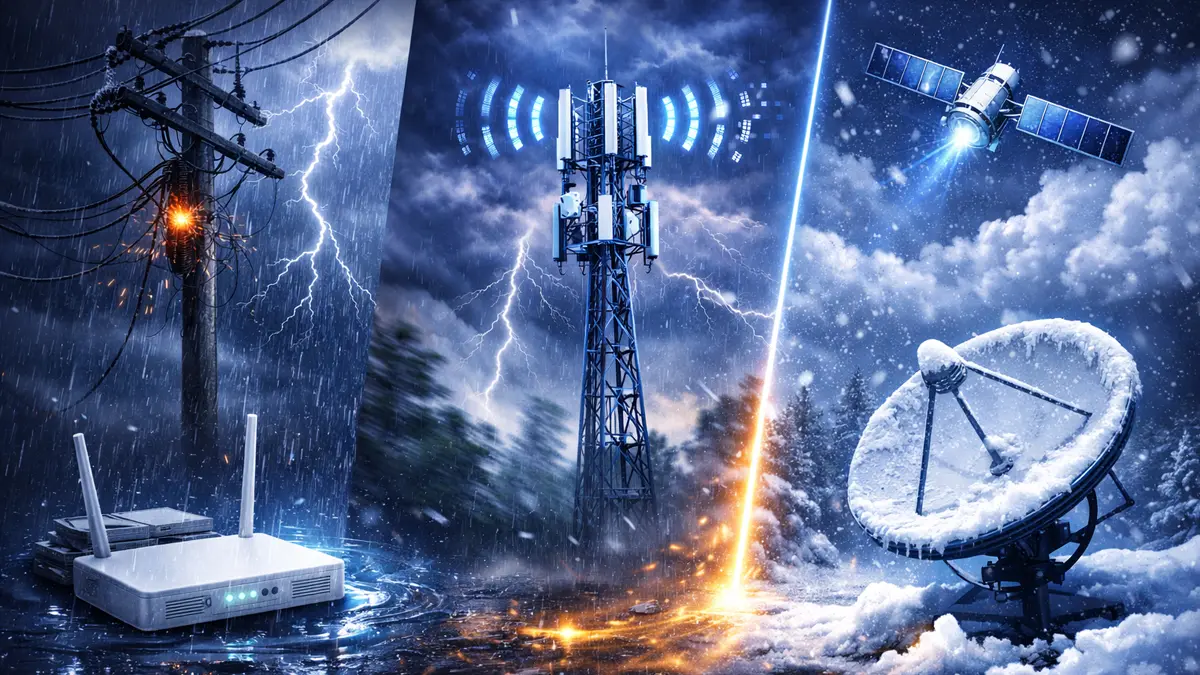
It is easy to blame the weather when your internet drops out during a storm. But does rain actually affect your broadband? The short answer is yes, but it completely depends on the type of connection you have. While modern fibre optic lines laugh in the face of bad weather, older copper phone lines and satellite dishes can struggle when the skies open up.
FULL FIBRE (FTTP)
If you have upgraded to a full fibre connection, you can relax. Fibre optic cables use pulses of light inside glass or plastic strands to transmit your data. Because there is no electrical signal travelling through metal, water cannot disrupt it.
- Rain & Snow: Zero impact. The cables are entirely waterproof and often buried underground.
- Wind: Usually not a problem unless falling trees physically snap the cables.
- Temperature: Extremely cold weather will not freeze the light signals inside your fibre line.
THE FIBRE EXCEPTION
The only time a severe storm will take out your fibre broadband is if the local telephone exchange loses power, or if a lightning strike hits the main infrastructure directly.
OLD COPPER LINES (ADSL / FTTC)
If you are still on a standard ADSL line or superfast fibre that relies on a copper phone line to reach your house, you have the highest chance of weather disruption.
The Water Problem
Copper wires conduct electricity. Over time, the protective outer casing on these wires can degrade. When heavy rain seeps into underground pits or old street cabinets, it causes short circuits. You will usually notice crackling on your landline or a massive drop in broadband speed until things dry out.
The Lightning Threat
Because copper conducts electricity so well, a lightning strike near your property can send a power surge straight down the phone line. This can easily fry your router and any connected devices.
SATELLITE AND MOBILE 4G/5G
Wireless connections are fundamentally at the mercy of the atmosphere. If you rely on Starlink or a mobile 4G/5G router, prepare for some bad weather turbulence.
Rain Fade
Heavy rain, snow, and dense clouds absorb radio wave energy. This is known in the industry as "rain fade". If you are trying to game or stream on a satellite connection during a massive downpour, your ping will likely spike and speeds will drop.
Wind Realignment
Gale force winds can slightly shift a satellite dish out of perfect alignment. Even moving an inch can degrade the signal quality, requiring you to go outside and recalibrate it once the storm passes.
THE COMPARISON
| CONNECTION TYPE | RAIN IMPACT | WIND IMPACT | OVERALL RELIABILITY |
|---|---|---|---|
| Full Fibre (FTTP) | None | Very Low | Excellent. The most weather-proof option. |
| Copper (ADSL/FTTC) | High (Water damage) | Medium | Poor. Highly sensitive to damp conditions. |
| Satellite (e.g. Starlink) | Medium (Rain fade) | High (Alignment) | Fair. Temporary dropouts during heavy storms. |
| Mobile (4G / 5G) | Medium | Low | Fair. Signal degrades in thick weather. |
HOW TO PROTECT YOUR CONNECTION
You cannot control the weather, but you can take steps to optimise your home setup and minimise the damage when bad weather strikes.
- Use a Surge Protector: If you use an older copper phone line, buy a high quality surge protector. Plugging your router into one can save it from getting fried during a lightning storm.
- Check Satellite Settings: If you use a modern satellite dish like Starlink, check the app during winter to ensure the snow melt feature is enabled so ice does not block the signal.
- Report Crackling Lines: If you hear static or crackling on your landline phone when it rains, call your provider immediately. It is a guaranteed sign that water is getting into the copper cables.
WEATHER FAQS
DOES RAIN AFFECT WI-FI SIGNALS?
Rain outside does not directly weaken the Wi-Fi signal inside your home. However, heavy rain can damage older copper internet cables in the street, which slows down the broadband coming into your house.
WHY IS MY INTERNET SO SLOW WHEN IT IS WINDY?
Wind itself does not block digital signals. But severe wind can blow tree branches into overhead cables, misalign satellite dishes, or cause power cuts at local network exchanges.
CAN A THUNDERSTORM BREAK MY ROUTER?
Yes. A nearby lightning strike can send a massive power surge through old telephone lines or your mains plug sockets. This can completely fry the internal components of your router.

VERDICT: THE FINAL WORD
Got Full Fibre? ✅ Relax. The weather will rarely affect your speeds.
On Older Copper? ⚠️ Keep an eye on water damage in the street cabinets.
Using Satellite? ☔ Expect some temporary drops during major storms.